



Maresca: Instant rapport with Mendes, instant split with Chelsea


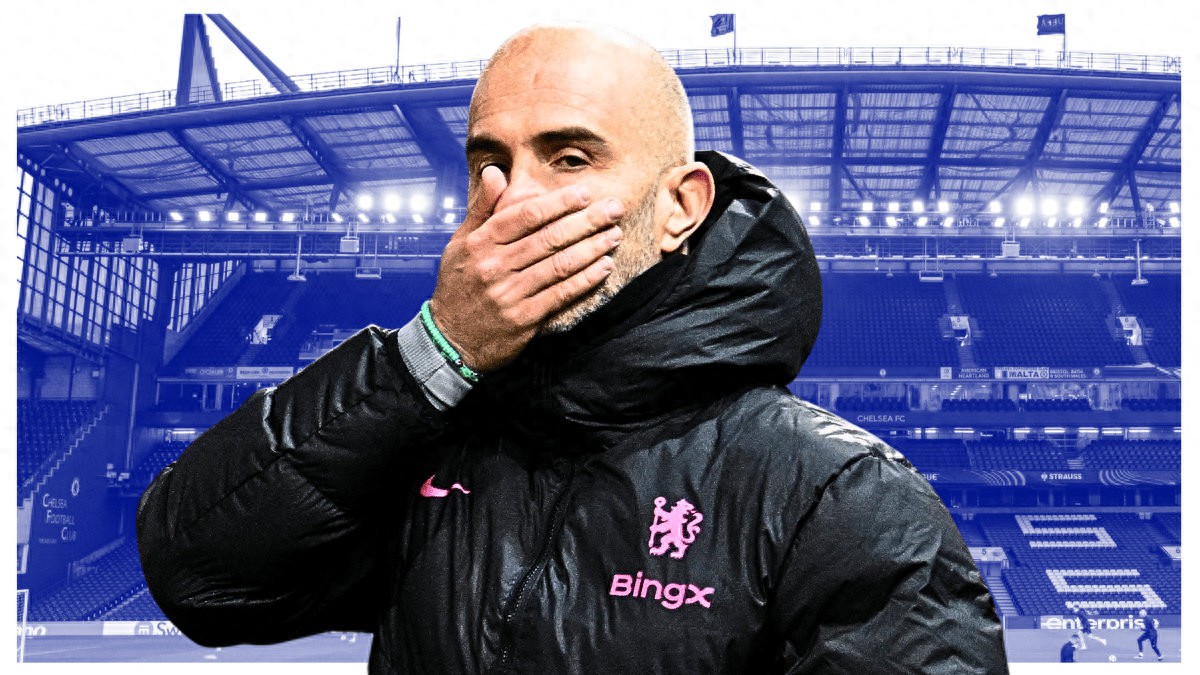
Written by Han Bing On New Year's Day 2026, at 12:18 pm London time, Chelsea declared the termination of head coach Maresca through a brief 99-word statement. The shock was not about the change itself, but how it was done. Historically, from Abramovich’s era to the Chenghu period, Chelsea’s management has always unilaterally dismissed coaches with hefty compensation, whereas this time Maresca’s departure was a “lightning mutual termination” between the coach and the club’s management.
In fact, after drawing with Bournemouth on December 30 last year, Maresca, who “called in sick” and skipped the press conference, had already decided to leave, outright rejecting Chelsea executives’ final ultimatum to improve the team’s performance by January.
Maresca had just switched to super agent Mendes as his representative and on New Year’s Eve presented his termination demands, leaving no time for the resting Chelsea executives to negotiate. The crisis meeting on New Year’s morning was merely a formality. With Maresca effectively initiating the “breakup,” Chelsea’s most bizarre coaching change in history was sealed: all executives unanimously agreed to terminate the contract, and the brief official announcement confirmed the complete rupture between the two parties.
Maresca served Chelsea for 18 months (549 days), managing 92 matches in total, leaving behind two trophies: the Europa Conference League and the Club World Cup, before decisively departing. The Italian became the sixth coach replaced in Chelsea’s American ownership era over three and a half years and was the most unique among them.
The most brutal coaching change in American-era Chelsea
After a narrow win against Everton on December 13 last year, Maresca suddenly “fired shots” at the post-match press conference, claiming he had endured the toughest 48 hours at Chelsea. Notably, the day before this outburst, Maresca had just been awarded Premier League Manager of the Month for November, yet immediately accused the club of “many people not supporting him and the team.” Following this incident, Chelsea won against Cardiff City in the League Cup but only managed two draws and one loss in the next three Premier League games until Maresca’s departure.
From the high-profile announcement on June 3, 2024, Maresca’s “relationship” with Chelsea actually lasted quite long (577 days). Among the six coaches in the American era, he held the longest tenure, managed the most matches (92), and had the highest winning rate (59.8%). Although he brought two trophies—the Europa Conference League and the Club World Cup—to the Blues, capital never tolerates any challenge; they only care about KPIs and employees’ defiance of authority. Even Tuchel, the celebrated coach who won the Champions League in 2022, was given only seven matches before being dismissed as a “remnant of the old regime” by Boehly. How much less tolerance could there be for an Italian coach with less fame and experience?
This seemingly swift and fierce “breakup” was actually the result of a long-standing stalemate between Maresca and Chelsea’s top management—a mutual abandonment. Maresca no longer wanted to be a head coach whose authority was constantly undermined, and Chelsea’s leadership did not want to keep a coach who was clearly an “uncertainty factor.” Within just 10 days, Maresca challenged the club’s authority twice, making his departure inevitable.
From being denied the signing of a new center-back in the summer, to being forced by the recruitment team to accept Ganacho, whom he did not want, and even being unable to control the medical team’s player evaluations, Maresca’s patience wore thin. When management started intervening in team selection, Maresca, who had greater ambitions and ideals, finally reached his limit. Since switching to Mendes as his agent, the Italian had already been counting down the days to leave Chelsea.
Maresca’s challenges to Chelsea’s “rules” had already begun, including multiple controversial remarks this season and frequent public statements after changing agents, which broke the unwritten rule of maintaining low media profiles within the club. Chelsea’s management tolerated several poor results during his 18-month tenure and even tried to “protect” the coach internally. However, in the end, their “relationship” was exhausted.
Now that he has left, nothing else matters
Besides the complete rupture with Chelsea’s management, Maresca’s firm decision to leave was partly due to divisions within the locker room. The sudden “outburst” on December 13 left players bewildered. On December 30, when Palmer was substituted after only 63 minutes, key players already expressed dissatisfaction. British media revealed that Maresca, who missed the press conference that night, had informed executives who often visited the locker room after matches that his absence was because he was considering immediate resignation. The Italian coach didn’t even say goodbye to the players, changing clothes alone and leaving without returning. Unaware players were later told by management that the scheduled recovery training was canceled, followed by two days of holiday before the break. Many players were still on vacation on New Year’s Day and only learned of the coach’s dismissal from the club’s announcement.
When players resumed training on January 2, within 24 hours of Maresca’s departure, the Daily Mail counted only eight players who publicly paid tribute to Maresca on social media, including Enzo, Cucurella, Caicedo, Neto, Chalobah, Jorgensen, Corvil, and Sanchez. However, 15 first-team players led by Palmer remained silent. Their silence does not necessarily mean they did not support the Italian coach, but it does indicate a split within the Chelsea locker room regarding Maresca’s departure. Perhaps Maresca knew that not everyone in the locker room backed him, which is why he left without farewell.
Because Maresca initiated the departure, Chelsea avoided paying a huge severance. His annual salary was £4 million, and unilateral dismissal would have cost Chelsea up to £14 million. But since Maresca insisted on leaving, although Mendes took over negotiations for a smooth exit, Chelsea likely only has to pay up to £2 million for the remainder of the season. Last year, Maresca reported contacts from Manchester City and Juventus and used a contract raise to stay, a tactic clearly familiar from Mendes’s playbook.
This “brutal” coaching change at Chelsea may be a relief for both Maresca and the club’s top management. When tolerance runs out, there is no need to endure further. However, after this major upheaval, it is unlikely that Chelsea’s performance this season will inspire much optimism.



 Links
Links
 Contact
 App
App