



Insights from South Korean Youth Football: A Dual Approach with Proven Results


By Han Bing South Korea’s youth football development strategy integrates a pyramid system of school leagues with a nationwide selection model operating through three tiers of youth training centers. The pyramid system is realized through collaboration between schools and professional clubs to build youth teams, while the tiered centers select top talents at different levels within the football association, establishing another channel for nurturing players. Since the launch of the "Golden Age" initiative, this dual-track strategy has achieved remarkable success.
Early Success of the Golden Age Strategy
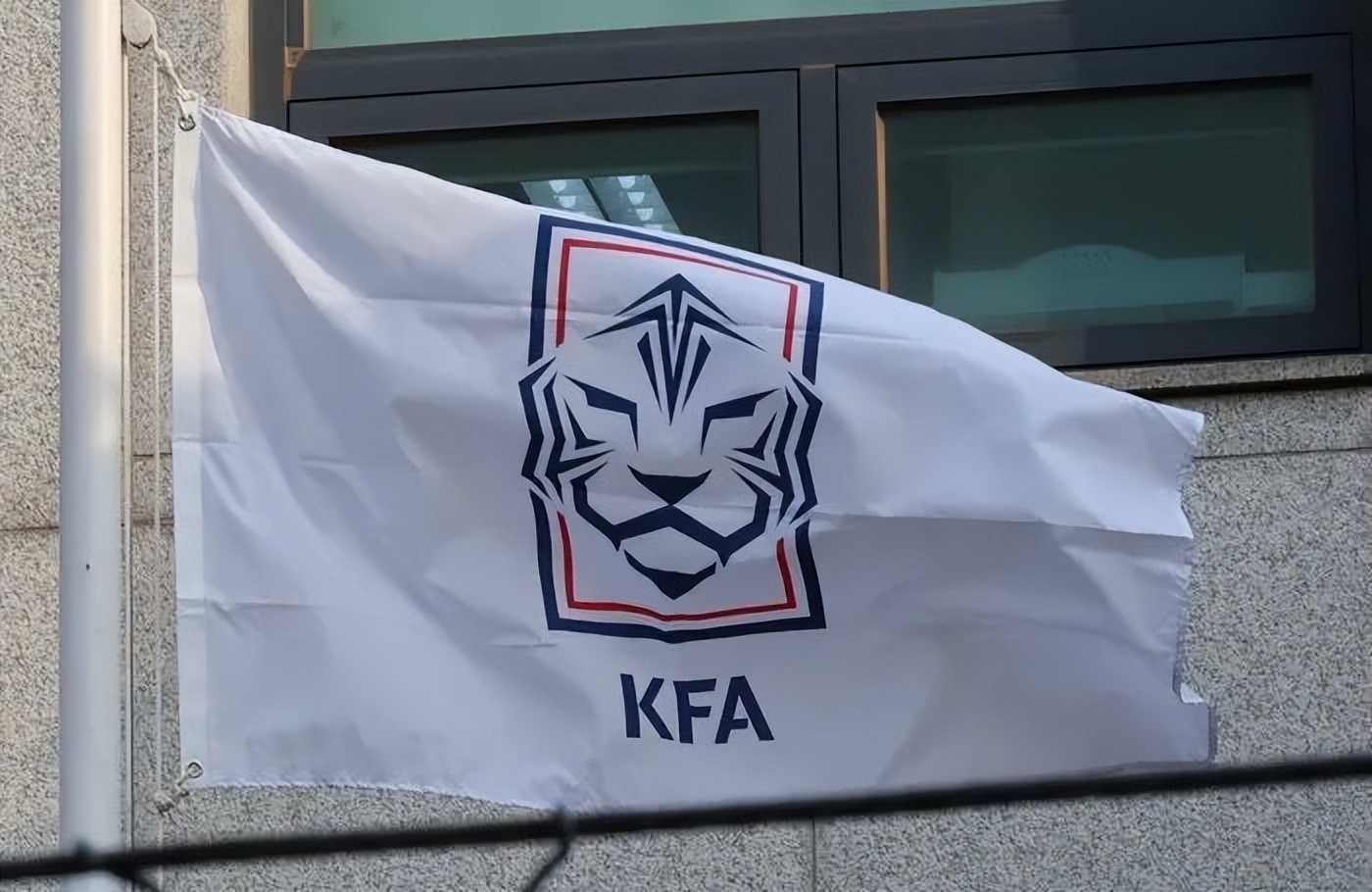
In 2014, the Korea Football Association introduced the "Golden Age" plan aimed at creating a nationwide player development framework. The plan divides youth aged 6 to 19 into three stages: "Pre-Golden Age" (6-11 years), "Mid-Golden Age" (12-15 years), and "Post-Golden Age" (16-19 years), establishing a "regional center – wide-area center – elite center" model for national talent selection.
The "Golden Age" plan includes 20 regional centers and 5 metropolitan centers across South Korea. Each year, through various competitions, youth teams from schools, clubs, and regional football association centers are evaluated. These 20 regional centers collectively forward about 2,000 promising players upward, with 300 eventually entering the national elite centers for training. The Korea Football Association ensures monthly training and competitions at all three levels of training centers to continuously monitor and track the development and potential of youth players.
Starting in 2020, the Korea Football Association introduced the "Golden Pass" youth ability assessment system. This system evaluates players based on 19 criteria across six domains, analyzing physical fitness, skills, intelligence, physique, psychological qualities, and creativity. It also quantifies players’ movement range, distances, and action details through match video analysis, enhancing the precision and professionalism of youth training.
The "Golden Age" plan’s evaluation criteria for youth players incorporate offensive football and possession tactics, including metrics such as active dribbling, passing, receiving, and shooting attempts. Goalkeeper evaluations now include ball control and passing, while striker assessments also consider shielding ability, reflecting South Korea’s efforts to align with advanced global football philosophies. The evaluation system inevitably influences school teams co-building youth squads with professional clubs.
In 2020, the Korea Football Association also launched the "Future Stars" program, designed to provide more opportunities for late-developing but high-potential youth players. This program targets players who struggle to enter younger national teams due to physical development limitations. The U13 to U15 national teams are divided into an A team and a "Future Stars" team, with the latter receiving additional match opportunities to prove themselves. For example, at the 2023 Qingdao U15 East Asian Cup, South Korea sent the "Future Stars" team, which finished third. Outstanding players caught the attention of the U15 national A team coaches.
Within a decade, the "Golden Age" project has yielded results: South Korea’s U20 national youth team reached the finals of the 2019 U20 World Cup and the semifinals in 2023. Notably, the entire 2023 U20 squad came from the "Golden Age" program. With the recent completion of the new Cheonan "Korea Football Park," all three levels of the talent center system are now fully operational. According to the Korea Football Association’s "2030 Youth" plan, this dual-track youth training model is running at full capacity, accelerating progress toward goals of reaching the World Cup semifinals and breaking into the world’s top 10 rankings.
A Shared Development Philosophy Provides a Basis for Exchange
South Korea’s youth football training strategy shares notable similarities with the youth football strategy promoted by the Chinese Football Association. China’s approach centers around 16 key football development cities nationwide, alongside pilot youth training programs in the west and a five-level youth training center system under a "nationwide selection" model.
Moreover, South Korea’s comprehensive reform of national team management, initiated in 2024, parallels reforms undertaken by the Chinese Football Association. South Korea’s establishment of the Cheonan "Korea Football Park" as a core multi-level youth training center mirrors China’s recent inauguration of a national youth training academy, with regional and provincial centers also rapidly progressing. National team management, a future priority for China, can benefit from observing South Korea’s reforms and adopting successful practices suited to China’s context.
Of course, for Chinese football, the immediate priority remains expanding the youth football population and improving the youth competition system. In this regard, South Korea’s extensive experience in building and maintaining a youth football competition structure offers valuable lessons. South Korea operates formal leagues at four levels—elementary, middle, high school, and university—and numerous traditional national youth tournaments, ensuring ample competitive opportunities for rapid player development. China’s youth football lacks high-level competitions, and Korean clubs, elite football school teams, and association-supported squads also seek to increase international exchanges, especially overseas training. Given the geographic proximity and longstanding football exchange traditions between the two countries, their similar youth development strategies provide a practical foundation for enhanced cooperation and communication.
South Korea’s youth football development has consistently led Asia in recent years, and its strategy shares many parallels with China’s, offering plenty of insights to draw upon. For Chinese football to advance globally, starting with its strong neighbor through growing exchanges and competitions could accelerate and cost-effectively build a sustainable football development model.



 Links
Links
 Contact
 App
App