



U23 Asian Cup Opponent Analysis: None of the Group Rivals Are Fielding Their Strongest Lineups


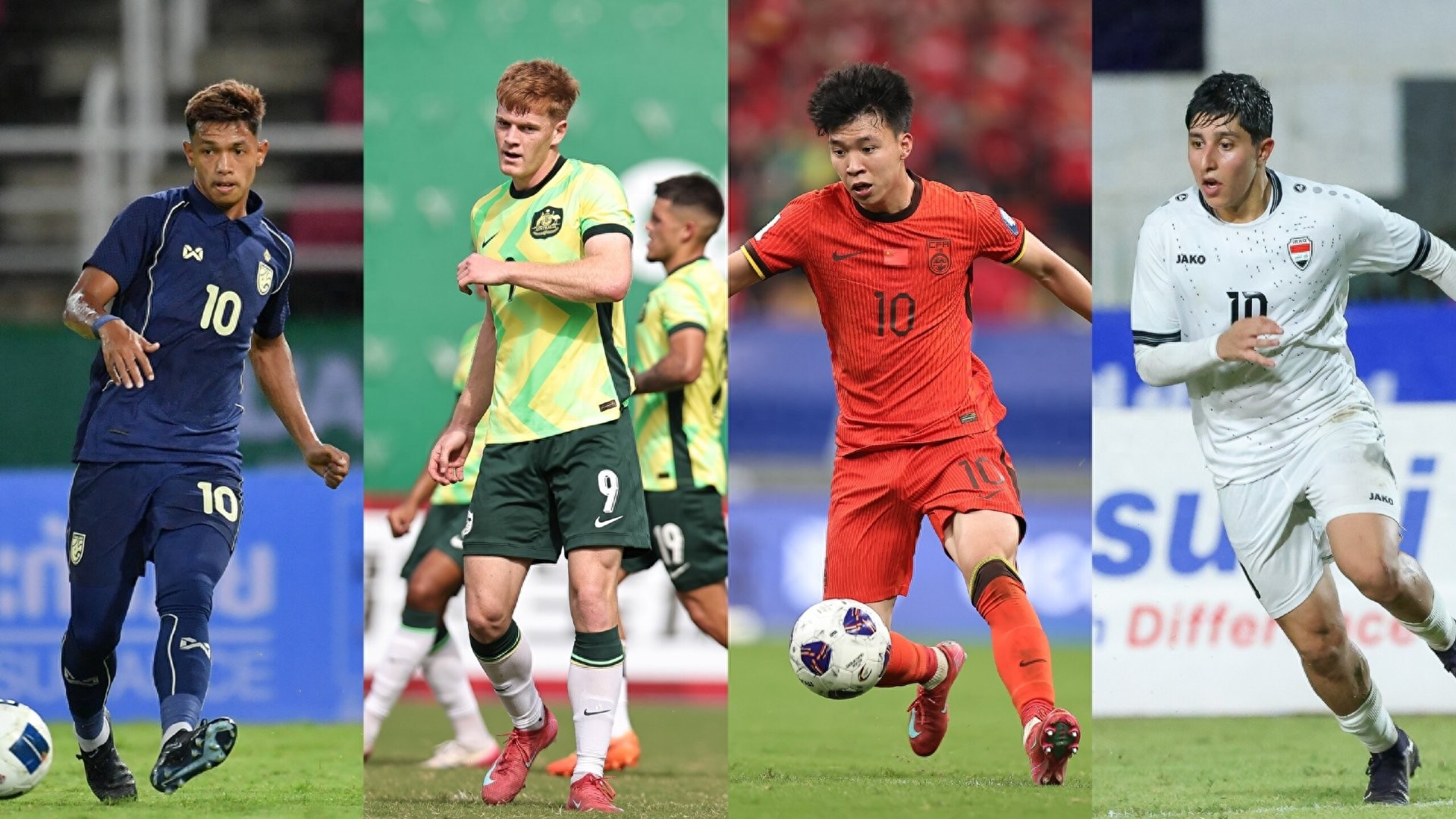
Written by Han Bing Iraq’s coach Imad Mohammed, who guided Iraq to second place in the 2023 U20 Asian Cup, hopes to maintain strong performances in Asian competitions, yet he is confronted with multiple challenges: overseas players under his command have not been granted club releases, and even young domestic talents face obstacles—clubs are pressuring the Iraq Football Association to alter the league schedule before they agree to fully release the called-up players. Consequently, Iraq’s U23 Asian Cup squad does not include their very best players.
Besides Iraq, the other two group opponents of China’s U23 team, Australia and Thailand, also face difficulties in assembling their full-strength squads. This naturally works to the advantage of China’s U23 team.
Iraq: Still in “Negotiations”
Since the U23 Asian Cup dates do not fall on FIFA-designated international match days, the Iraq Football Association has encountered almost complete refusal from clubs to release eligible overseas players. Of the 23 players named by coach Imad, only 19-year-old defender Rashid is a returning overseas player. Born in Denmark to Iraqi and Lithuanian parents, Rashid trained at local Danish clubs Nordsjælland and Aalborg. In 2024, he briefly joined Torino’s youth team before moving to Slovenian powerhouse Maribor, where he mainly plays in the youth ranks.
Last month, Iraq’s U23 team participated in the U23 Gulf Cup. Although not at full strength, they still achieved consecutive wins against Oman, UAE, and Qatar, ultimately finishing as runners-up after a narrow loss to Saudi Arabia in the final. Coach Imad initially hoped to build the team around the core of the 2023 U20 Asian Cup runner-up squad and the U20 World Cup players, but only 11 of the 23 selected players come from those teams, including key goalkeeper Hassan, center-back Rashid, fullbacks Majid and Rad, defensive midfielder Qasim, attacking midfielder Abdulkarim, and a semi-regular striker Kabeer. European-based players Gassim (right-back), Durash (center-back), winger Yousuf Amin, and Shamoun were all denied club release. Queen’s Park Rangers agreed to release midfielder Olaha, but his permit arrived too late for the U23 Asian Cup registration deadline, forcing the Iraq FA to forgo him.
Also absent from the U23 Asian Cup are winger Jassim (now playing for Al-Nassr in Saudi Arabia), and other overseas players who did not make the squad two years ago: Majid (Hammarby, Swedish top league), midfielder Shlimon (Assyriska, Swedish second division), forward Fargi (Strommen, Norwegian First Division), and Iraq’s U23 star Ikbal (trained at Manchester United, now at Utrecht in the Dutch Eredivisie). Except for Olaha, the other nine overseas players have senior national team caps. Ikbal and Yousuf Amin are key national team members, and their absence significantly weakens Iraq’s U23 squad.
Not only are overseas clubs refusing to release players, but Iraq’s domestic powerhouse Baghdad Messengers, which has five players in the squad, is also negotiating tough conditions with the Iraq FA. Baghdad Messengers demand that the league matches be postponed; otherwise, they will only release two players instead of five. The five key U23 players involved include goalkeeper Hassan, right-back Rad, Mahdi, defensive midfielder Sadik, and attacking midfielder Abdullah Karim. The club’s hardline stance leaves coach Imad very frustrated. He complained that only nine players showed up for training, and the team’s planned departure to Saudi Arabia on January 4 had to be delayed until the 6th due to incomplete squad availability.
The Iraq Football Association chairman Adnan has clearly stated that the already severely delayed league schedule will not be postponed further, though negotiations with clubs continue. The Iraq FA has submitted the final squad list to the AFC and can only replace players due to injury up to 24 hours before the first match. Iraqi media report that the FA will wait until the evening of January 5 local time.
Australia: A Squad Resembling a “Third Team”
On December 29, 2025, the Football Federation Australia announced their 23-player squad for the U23 Asian Cup. Although eight players are overseas-based, many well-known key players of eligible age are missing, including the highest-valued Ilankunda (Bayern), Cicatti (Parma), Boss (Mainz 05), Robertson (Cardiff City), Segočić (Portsmouth), Matthews (Portsmouth), Kuol (Sparta Prague), M. Toure (Rennes), and Goodwin (Charlotte FC).
Moreover, 10 players who formed the core of Australia’s U23 team during the qualifiers last September against China’s U23 team were left out. This includes goalkeeper Beach and midfielders Rick and Grimadi, all with senior national team experience. Additionally, 11 players in the current squad have never appeared for Australia’s U23 team before; only defender Lawrences (10 caps) and midfielder Varadon (7 caps) have more than five U23 appearances. This Australian U23 squad can effectively be regarded as a “third-string” team.
However, this Australian U23 side should not be underestimated. Center-back Bower (Central Coast Mariners), right wing-back Simmons (Western Sydney Wanderers), right-back Lawrences (Melbourne Victory), midfielders Varadon (Melbourne Victory), Alagic (Adelaide United), right winger Dukuri (Adelaide United), and striker Jovanovic (Adelaide United) are all regular starters in the new A-League season. Additionally, forwards Drew (Hartberg, Austrian Bundesliga) and Piol (Real Salt Lake, MLS) have established themselves in top overseas leagues. Drew, recently recovered from injury, will provide a significant boost to Australia’s attacking line.
Due to difficulties in calling up players born after 2003, Australian U23 coach Vidmar has had to promote several U21 players unusually. The 23-man squad includes eight players born after 2005, among them goalkeeper Hall, midfielders Perlman and Agosti, and forward Jokanovic, who were all promoted from this year’s U20 Asian Cup-winning Australian U20 team. Among the eight overseas players, five were born after 2005. Ovelli, an 18-year-old defender from Manchester United’s youth team, is the youngest and was already called up to Australia’s senior national team last November.
Coach Vidmar is a respected figure in Australian football, having previously served as assistant coach at Melbourne City and with the Australian national team. Since May 2022, he has been head coach of the Australian U23 team. He led the team to the semifinals of the 2022 U23 Asian Cup, but in the 2024 edition, Australia drew with Jordan and Qatar and lost to Indonesia, failing to advance past the group stage. For this U23 Asian Cup, Australia still cannot field its strongest squad, but with key domestic starters in defense and midfield and overseas dark horses like Drew and Piol, Vidmar’s goal remains to advance from the group and challenge for the semifinals.
Thailand: Sending a “Second-String” Squad
Compared to the stronger sides Iraq and Australia, Thailand’s U23 team is even weaker this time, with as many as eight key players absent, making their strength inferior to the team that warmed up in Kunming last October. Last month, Thailand’s U23 team finished runner-up at the Southeast Asian Games, but ten players were excluded from the U23 Asian Cup squad due to club refusals to release them. These include main goalkeeper Bosman, center-backs Tama and Buapan, right-back Chutong, midfielders (captain) Latri and Otong, winger Kanjo, and striker Brappa. Brappa, who plays for Singapore’s Hougang United, was the top scorer at the Southeast Asian Games with seven goals. Along with captain Latri, Kanjo, Tama, and Chutong, all with senior national team experience, they form the core of Thailand’s U23 team.
Only 12 players in Thailand’s 23-man squad for this U23 Asian Cup participated in last October’s warm-up matches against China’s U22 team in Kunming. At that time, China’s U22 team won the first match 3-1 and drew 0-0 in the second. Only two players in the current squad were starters in the Southeast Asian Games final: winger Wandi and left-back Jansen. Additionally, four others—substitute center-back Sinkrathon, defensive midfielder Nasi, winger Salau, and goalkeeper Bochai—were also part of that squad.
Since taking over Thailand’s U23 team in May last year after losing the Southeast Asian Games final to Vietnam, coach Danlong Ondrakun has faced enormous pressure. For this U23 Asian Cup, he recruited 14 newcomers under 22 years old, including nine born after 2005, and two players (right-back In Aram and right winger Bruton) who are only 18. Danlong admitted that due to the large number of missing key players, Thailand’s U23 team will not prioritize results at this tournament but will focus on gaining experience for young players. His original plan to hold a warm-up match in Thailand before departing for Saudi Arabia on January 3 was cancelled because Thai clubs were on New Year’s holiday.
Thailand’s U23 squad for this Asian Cup lacks the entire central spine from goalkeeper to striker, especially with the absence of Southeast Asian Games top scorer Brappa, which greatly reduces the team’s attacking power. Coach Danlong had to adjust tactics: “We cannot continue playing attacking football like at the Southeast Asian Games. At the U23 Asian Cup, we must focus on tight defensive organization, aiming to concede fewer goals and improve counterattack accuracy.” To strengthen defense, the 1.89m tall Anglo-Thai center-back James and Moroccan-Thai left-back Tionkan were recruited. James previously played for Burnley and Barnsley youth teams and joined Thai League club Pattani United in March this year.
Southeast Asian Games top scorer Brappa participated in last October’s warm-up matches against China’s U22 team, posing a significant threat to China’s defense. His absence in the U23 Asian Cup undoubtedly eases the defensive burden for China’s U23 team. Also, captain Latri, who trained for a season with Leicester City’s youth team, was not selected for Thailand’s U23 squad this time.
Thailand’s U23 team only gathered all players on December 30 last year and started training at the Yamagoka Football School in Pathum Thani province. They concluded their domestic training on January 3 and departed for Saudi Arabia that evening. Coach Danlong has set the goal of advancing from the group stage, but given the team’s lineup strength, achieving this will be very challenging.


Wonderfulshortvideo
CR7 was really going through it 🤣🏆


 Links
Links
 Contact
 App
App